
Last updated November 15, 2026
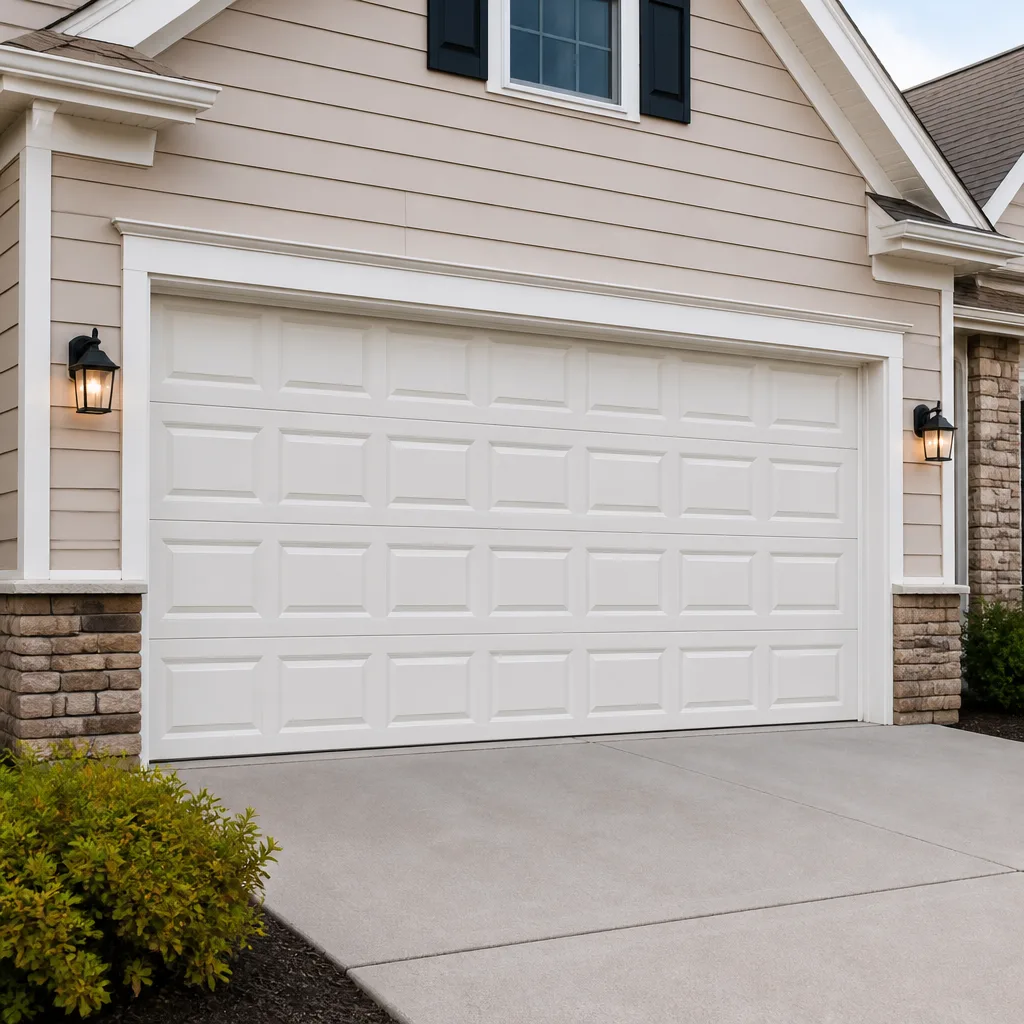 Raised-panel steel
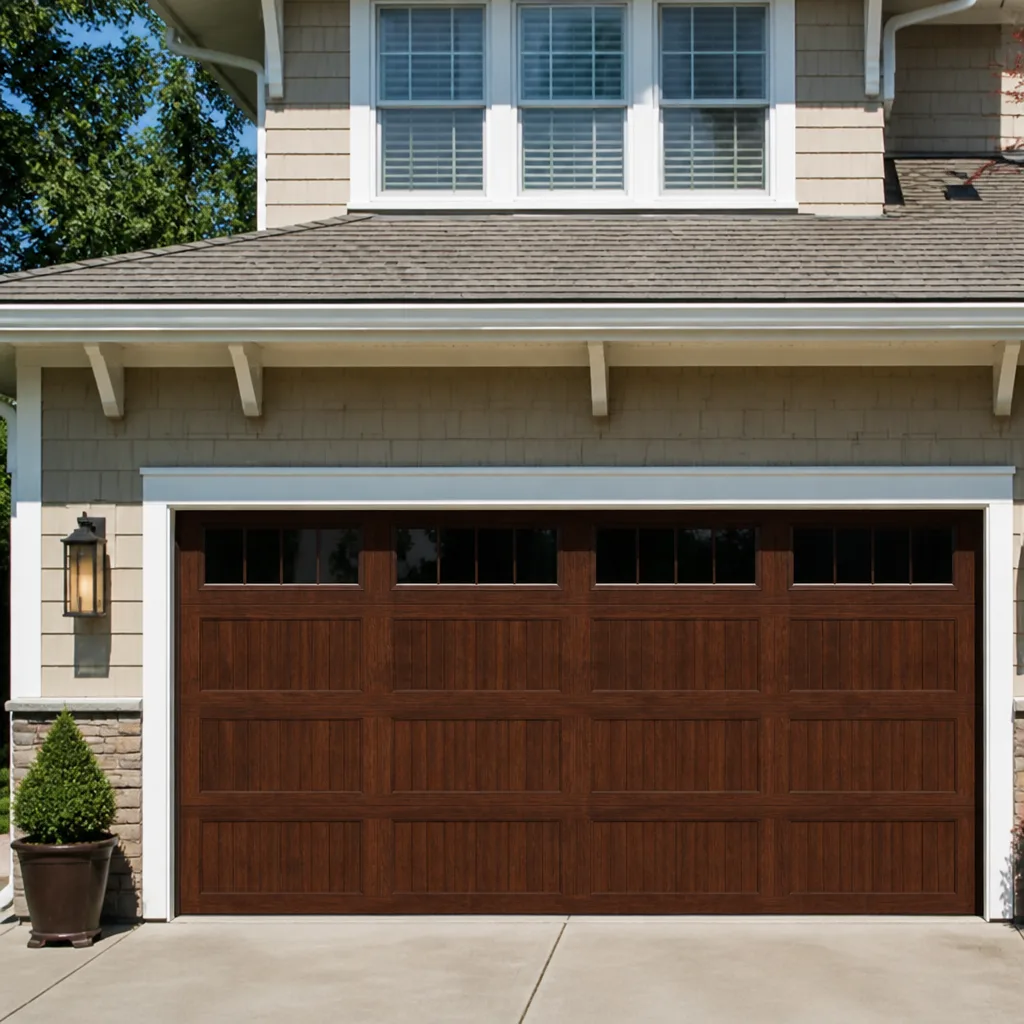
 Carriage house
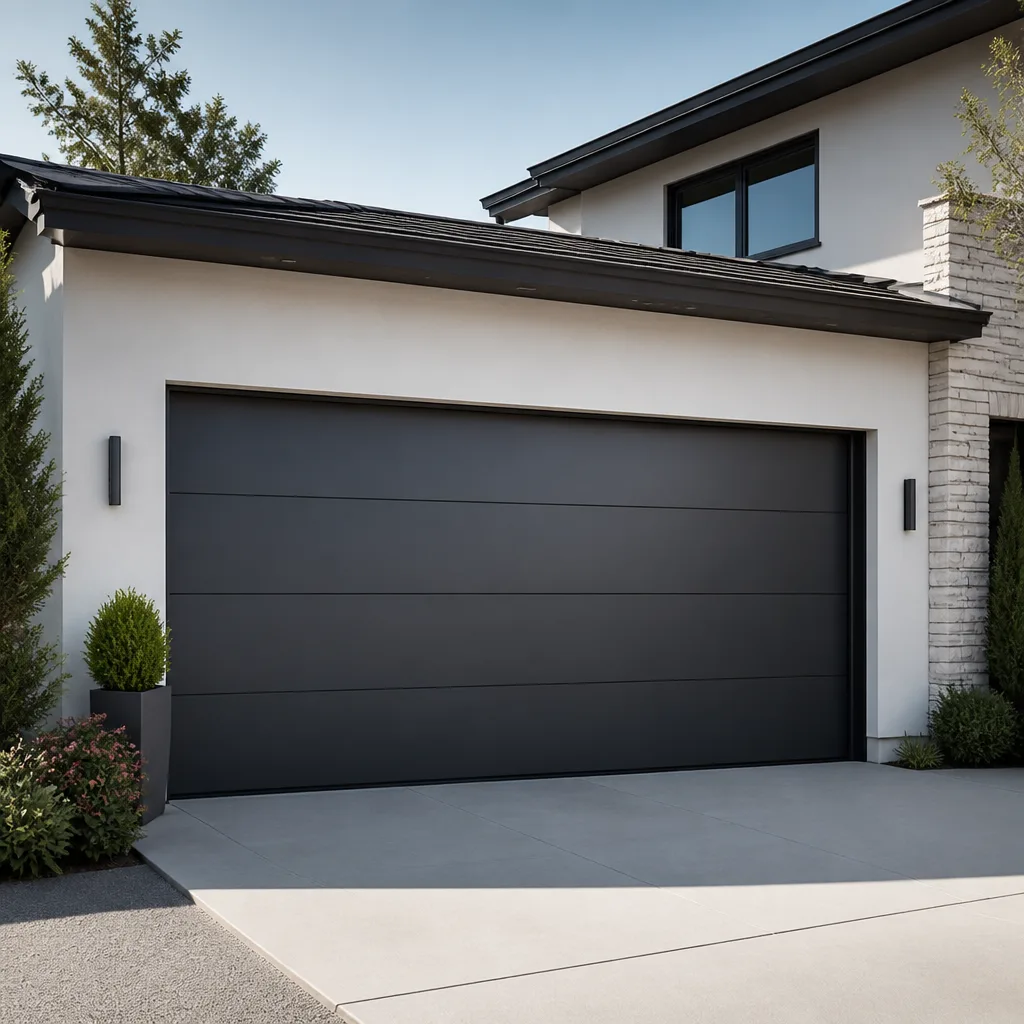 Modern flush
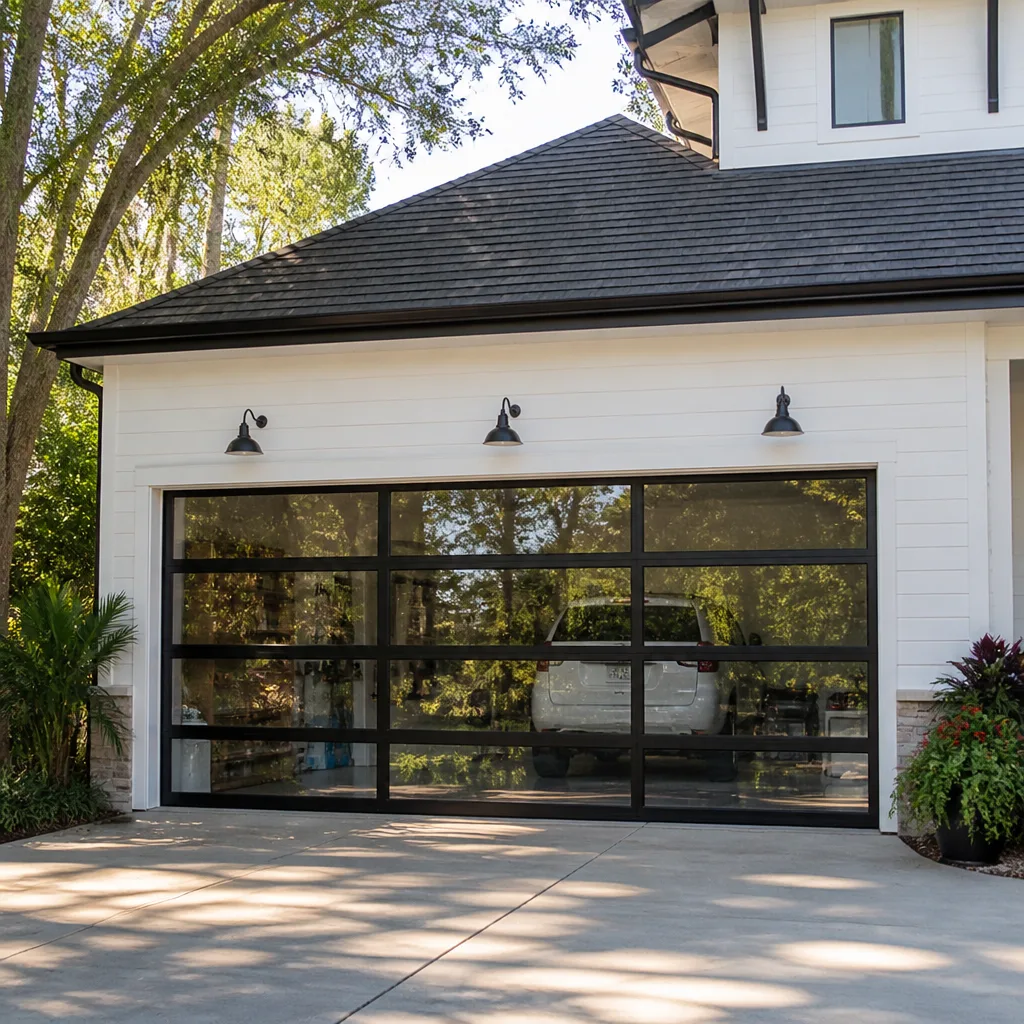 Full-view glass
 LiftMaster openers
 Chamberlain openers
Full 25-point door and opener safety check with every visit - springs, cables, rollers, tracks, and your LiftMaster or Chamberlain opener included
You get a price before we start. It does not change when the pro arrives.
Get your free estimateGarage Door Warning Signs: A Salt Lake City Homeowner’s Reference Guide
A garage door that shudders on the way up and a garage door that shudders on the way down usually have different causes. One is often a spring issue; the other is typically a track or roller problem. Most homeowners describe both the same way, and that’s the trap. Vague symptoms get vague diagnoses, and a vague diagnosis is where overselling starts. This guide maps the twelve most common observable warning signs to their actual mechanical causes, separates the normal quirks of a Salt Lake City door from the signs of real failure, and shows you what a door looks like 30, 60 and 90 days before it quits. By the end you’ll be able to describe exactly what your door is doing, which is the single best protection you have against paying for the wrong fix.
Quick Answer
Most garage door warning signs point to a specific failing component: a grinding sound usually means bearings or rollers, a jerking door usually means a worn spring or a bent track, and a door that reverses on its own usually means an opener sensor or limit issue. In Salt Lake City, cold-morning creaking is often normal contraction and temperature-related noise, but any sign that involves a fraying cable, a gap in the spring, or a buckling panel is a safety risk that warrants immediate attention rather than a scheduled appointment.
Styles & brands we work with
- Raised-panel steel
- Carriage house
- Modern flush
- Full-view glass
- LiftMaster openers
- Chamberlain openers
Table of Contents
- The Symptom-to-Cause Reference Table
- What’s Normal in Salt Lake City and What Isn’t
- How to Tell a Door Problem From an Opener Problem Without Tools
- Signs That Are a Safety Risk Right Now
- What Failure Looks Like 30, 60 and 90 Days Out
- How to Describe the Problem So You Get the Right Fix
- Preventive Checks That Actually Matter
The Symptom-to-Cause Reference Table
This is the heart of the guide. Every warning sign a homeowner can see or hear has a short list of likely causes, and knowing them changes the conversation when you call for service. We’ve built this table from what our technicians actually encounter on Salt Lake City doors. Our technicians have up to experience diagnosing these systems, and the pattern holds across brands like LiftMaster, Chamberlain, Craftsman and Raynor.
- Loud grinding or scraping: Worn rollers, dry bearings, or a torsion spring that’s lost tension and isn’t lifting smoothly.
- Door jerks or shudders on the way up: A weakening torsion spring, or a spring that’s binding rather than releasing evenly.
- Door jerks on the way down: A bent vertical track, a roller jumped out of its channel, or a misaligned track.
- Door reverses before it closes: Opener safety sensor misalignment, an obstruction in the photo-eye path, or a limit setting that’s drifted.
- Door reverses before it opens: A binding door the opener is fighting, or a worn spring making the opener work too hard.
- Door won’t move at all but opener motor hums: A stripped gear in the opener, or a broken door spring that leaves the opener unable to lift.
- Door runs but motor doesn’t: A broken torsion spring, or a disconnected emergency release that’s been pulled and not reset.
- Squealing or high-pitched noise: Dry rollers, a failing bearing plate, or lack of lubrication on the torsion shaft.
- Sagging panel or door not sitting square: A broken spring, a stretched cable, or a hinge that’s pulled loose.
- Cable hanging loose or visibly frayed: A worn cable ready to snap. This is a stop-now sign.
- Visible gap in the torsion spring: A spring that has fractured. Stop using the door.
- Door stops mid-travel and won’t continue: An opener travel limit out of adjustment, or a door binding against a track.
The pattern most homeowners miss: the noise they hear and the symptom they describe are often two different problems. A grinding sound and a jerking motion together rarely come from the same part. When you can name both, you help a technician aim straight at the right component. That’s why we ask what a door does and when it does it before we ever arrive; the answer tells us whether we’re looking at spring work or track work. If you want a proper diagnosis, our garage door repair service is built around exactly that.
What’s Normal in Salt Lake City and What Isn’t
Garage doors in Salt Lake City live in a particular climate. Cold winter mornings, dry summer air, and a valley setting where temperatures swing hard day to day. Those swings matter. Metal expands and contracts more than most homeowners realize, and much of what sounds alarming on a January morning is just physics at work.
Here’s what’s usually normal:
- Creaking on the first cold-morning startup. Metal components and the tracks contract overnight and shift as the door moves. A single or double creak that fades once the door has run a few times is usually just that.
- A faint squeak that develops over a dry summer. Dry valley air pulls lubricant out of rollers and hinges faster here than in a humid climate. A quiet door in June can become a squeaky one by August.
- Rattling on windy days. Loose panels and hardware move more than you’d think in a strong gust.
Here’s what’s not normal, even in this climate:
- Consistent grinding that doesn’t fade. Cold-morning noise that goes away is normal. A grind that’s still there after five cycles is a mechanical problem.
- The door feeling heavy when you release the opener. A balanced door should lift and lower with modest hand effort when disconnected. If it feels like you’re fighting it, the spring is failing.
- A door that gets louder every week. Noise that grows steadily rather than holding steady is a sign of a component wearing down, not a climate quirk.
- Sagging or uneven panel lines. Cold weather can tighten things, but it never makes a door sit crooked.
Altitude does change the way a door behaves in subtle ways: opener limit switches sometimes need adjustment for the door travel in a home built at the higher elevations around the valley, and the extra cold at elevation makes spring contraction more noticeable. None of that means your door is failing. It means the door’s behavior in Salt Lake City is a bit more active than in a low-lying mild-winter city, and you should judge it against that baseline rather than against what you’d expect somewhere near sea level.
How to Tell a Door Problem From an Opener Problem Without Tools
The single most useful diagnostic skill a homeowner can learn is separating a door problem from an opener problem. This is the wrong-fix zone. A door with a worn spring that gets a new opener will fail again in weeks. An opener with a stripped gear that gets a whole new spring has been overcharged for the wrong repair. You can tell the difference with observation alone, no tools required.
- Pull the emergency release. With the opener disconnected, lift the door by hand. It should move smoothly and with modest effort. If it’s heavy or jerky, the problem is on the door side: spring, track, cable or roller.
- Watch the door run on the opener alone. Reconnect and cycle it. If the door moves smoothly now but the opener motor makes grinding or humming sounds without moving the door, the opener side is failing.
- Listen for where the noise originates. Noise from the ceiling rail, the motor unit, or the light housing is opener-related. Noise from the door panels, tracks or the torsion spring above the door is door-related.
- Check the photo-eye sensors. Stand inside and wave an object through the beam. If the door doesn’t reverse, or reverses without anything in the path, the safety sensor system on the opener side needs attention.
- Try the wall button versus the remote. If the wall button works but the remote doesn’t, it’s a remote issue. If neither works, the opener logic board or power supply is the likely culprit.
- Watch the door’s travel. If the door starts moving and then stops dead mid-travel, that’s often an opener limit setting. If the door strains or binds before stopping, that’s a door problem the opener can’t overcome.
This sequence takes about five minutes and tells you which half of the system to focus on. It’s the same first call we make on any garage door opener repair visit, because the opener is only ever as good as the door it’s lifting. If the door is binding, the opener is going to wear itself out no matter how many parts get replaced.
Signs That Are a Safety Risk Right Now
Some warning signs let you schedule a repair at a convenient time. Others mean you should stop using the door today. The difference is whether a failure could hurt someone.
The signs in this category are not subtle, but homeowners routinely look past them. If you see any of the following, stop operating the door and get a professional to look at it:
- A frayed or visibly damaged cable. Cables carry the tension of the spring, and a frayed cable is a snap waiting to happen. A snapping cable under tension is a genuine physical hazard.
- A visible gap in a torsion spring. A fractured spring has already failed partway. Running the door can cause the remaining spring to fail, and that failure happens suddenly.
- A buckling or detached panel. Panels that have come loose from the frame can fall. On a heavy door, that’s a real injury risk.
- A door that drops quickly on closing. If you can’t control the door’s descent by hand, the spring and cable balance is compromised.
- Loose hardware swinging under the opener track. A bracket that’s pulled loose can drop.
The spring and cable assembly is the most dangerous part of any garage door. Torsion springs hold enormous stored energy, and a spring that fails while someone is near it can cause serious injury. We won’t give you step-by-step advice for working on springs or cables yourself, because this is exactly where the do-it-yourself approach turns dangerous. A trained technician knows how to release and replace that tension safely; a homeowner with a winding bar and a video tutorial does not. We say this plainly because we’ve seen the results of home spring repairs, and the risk isn’t worth it. If a spring or cable has failed, treat the door as out of service and call a professional.
For the other signs: a grinding noise, a crooked panel, a door that runs loud or slow. These are real problems, but they allow you a scheduled repair window rather than a same-day emergency call. They’re more likely to get worse than they are to fail safely, so a bit of planning is fine. Call us at (866) 389-4585. We answer 24/7. Fast dispatch from 7am to 7pm, Sunday through Friday.
What Failure Looks Like 30, 60 and 90 Days Out
The warning signs most homeowners miss aren’t visible in the moment of failure, they’re visible in the weeks before it. A garage door rarely quits without warning. It telegraphs its decline over about three months. Understanding that progression is how you get ahead of a repair instead of chasing a breakdown.
90 days out. The early signs are small and easy to dismiss. The door gets slightly noisier. A creak here, a rattle there. The motor sounds the same but the door seems to move a touch slower in the first and last few inches of travel. Greasing a hinge or tightening a bolt quiets it for a while. That quieting is reassuring but deceptive: the underlying wear is still advancing. This is the phase where a tune-up or a roller and hinge replacement is most cost-effective, and it’s the phase nearly every homeowner skips.
60 days out. The noise no longer quiets with a quick tighten. The door feels slightly heavier when you lift it by hand. The opener pulls harder at the start of the cycle, and the door might reverse once before it opens properly. Small inconsistencies appear: sometimes it opens fully, sometimes it stops a few inches short. A sagging corner, a slightly crooked track, or a roller that barely rotates are common here. A trained eye will spot the specific component at this stage. A homeowner guessing will often pick the wrong one.
30 days out. The door is now visibly struggling. Grinding is constant. The door reverses unpredictably. The motor hums but the door doesn’t move. You’re calling after a night of the door not closing, or the door closing only on a second or third attempt. The failed component is nearly always a spring, a cable, or the opener gear, and the repair is no longer a tune-up: it’s a component replacement, and possibly an opener replacement if the door has been fighting a failing spring for months. This stage costs more than the stage 60 days earlier, every single time.
The lesson is straightforward: the cheapest time to fix a garage door in Salt Lake City is when the first quiet noise appears, not when the motor hums and the door doesn’t move. The early signs are the most actionable signs you’ll ever see, and they’re the ones most likely to be ignored.
How to Describe the Problem So You Get the Right Fix
A technician can only quote accurately on what they understand. When a homeowner calls and says “my door is broken,” the technician has to guess, and guessing is where the wrong fix gets booked. When a homeowner calls and says “the door jerks going up but not coming down, and it’s louder on cold mornings,” the technician knows to check the torsion spring and the torsion shaft lubrication before anyone touches a wrench.
Here’s how to describe what you’re seeing so the conversation goes straight to the right component:
- Say which direction the problem happens. “Going up” and “going down” are different clues, as we covered at the top of this guide.
- Say whether it’s a sound, a motion or both. A grinding sound without a jerking motion is a different issue than both together.
- Say whether the opener or the door seems to be the source. “The motor hums but the door doesn’t move” is a different call from “the door is heavy when I pull it by hand.”
- Say what the door does with the opener disconnected. Heavy or smooth? Jerky or even? The answer narrows the diagnosis to door-side or opener-side almost instantly.
- Say how long it’s been happening and whether it’s getting worse. A new noise this week is different from a noise that’s been growing for a month.
- Say what brand is on the door and opener. A LiftMaster, Chamberlain, Craftsman or Raynor system has known wear patterns, and knowing the brand lets us order the exact part rather than a workaround.
- Say whether there’s a visible concern. A gap in the spring, a frayed cable, a bent track or a sagging panel is a different priority level, and telling us upfront prevents any wasted visit.
This is why we ask you to be as specific as possible before quoting. The written price you get is built on what the technician can confirm in person and what you’ve told us on the call. If you describe the symptom accurately and the cause confirms, you pay for the fix that addresses it. Getting the description right is not just polite, it’s what protects you from paying for a repair you didn’t need. The same principle applies whether the door is a Raynor with a legacy opener or a current myQ-compatible LiftMaster system.
Preventive Checks That Actually Matter
There’s a lot of noise about garage door maintenance, and most of it is either obvious or pointless. Here’s the short list of checks that genuinely catch problems while they’re still small enough to be cheap.
- Lubricate hinges, rollers and the torsion shaft. A silicone-based garage door lubricant applied to the moving metal keeps dry-air squeaks from becoming seized rollers. In Salt Lake City’s dry summers, this is worth doing about twice as often as in a humid climate.
- Test the balance twice a year. With the door closed, pull the emergency release and lift the door halfway by hand. It should hold near where you let go. A door that sinks or rises means the spring balance is off, and it’s worth having it checked.
- Check the photo eyes. Wave an object through the sensor beam and confirm the door reverses. This is the single cheapest safety check and the one most often skipped.
- Look at the spring and cable. A visual check for a gap in the spring, rust at the cable ends, or a cable that hangs slack is quick and harmless. If you see a frayed cable or a spring gap, stop and call a professional.
- Listen to your door once a week. A door that sounds the same every time is telling you it’s fine. A door that sounds worse than last month is telling you to look.
- Check the door’s travel and stops. Confirm the door closes fully and seals against the floor without a gap, and opens fully without strain at the top.
None of this replaces a technician inspecting the springs and cables, which is work best left to a professional. But these checks get you to the call earlier, and earlier is always cheaper than later. If you want your door checked by someone who services every major brand and every opener drive style, we can help. For a full look at what we do across the full lifecycle of your door, see Cypress Garage Door Service.
Common Mistakes to Avoid
- Greasing a spring and calling it fixed. Lubrication quiets noise but doesn’t restore spring tension. If the door is jerking, the spring is the problem, not the grease. Grease alone just delays the failure.
- Replacing the opener because the door is heavy. A heavy door means the door-side balance is off, and a new opener will burn out trying to lift it. Diagnose the door first.
- Ignoring a frayed cable as “just cosmetic.” A frayed cable is a safety hazard. Don’t wait for a full break, and don’t try to replace it yourself; the tension is dangerous.
- Assuming every noise is the door. In Salt Lake City’s dry air, some creaking is normal. A grinding noise that gets worse, however, is not.
- Describing the symptom vaguely and accepting the first quote. “It’s broken” invites a guess. A specific description of direction, sound and opener behavior gets a specific fix.
- Calling an all-purpose handyman for a spring or opener job. Garage door work is its own trade. A generalist may get to the right answer, but the wrong guess costs you a second repair.
- Waiting until the door won’t close at all. The 30-day failure window is always more expensive than the 90-day window. Small warning signs are cheap to fix; a full failure at the wrong moment is not.
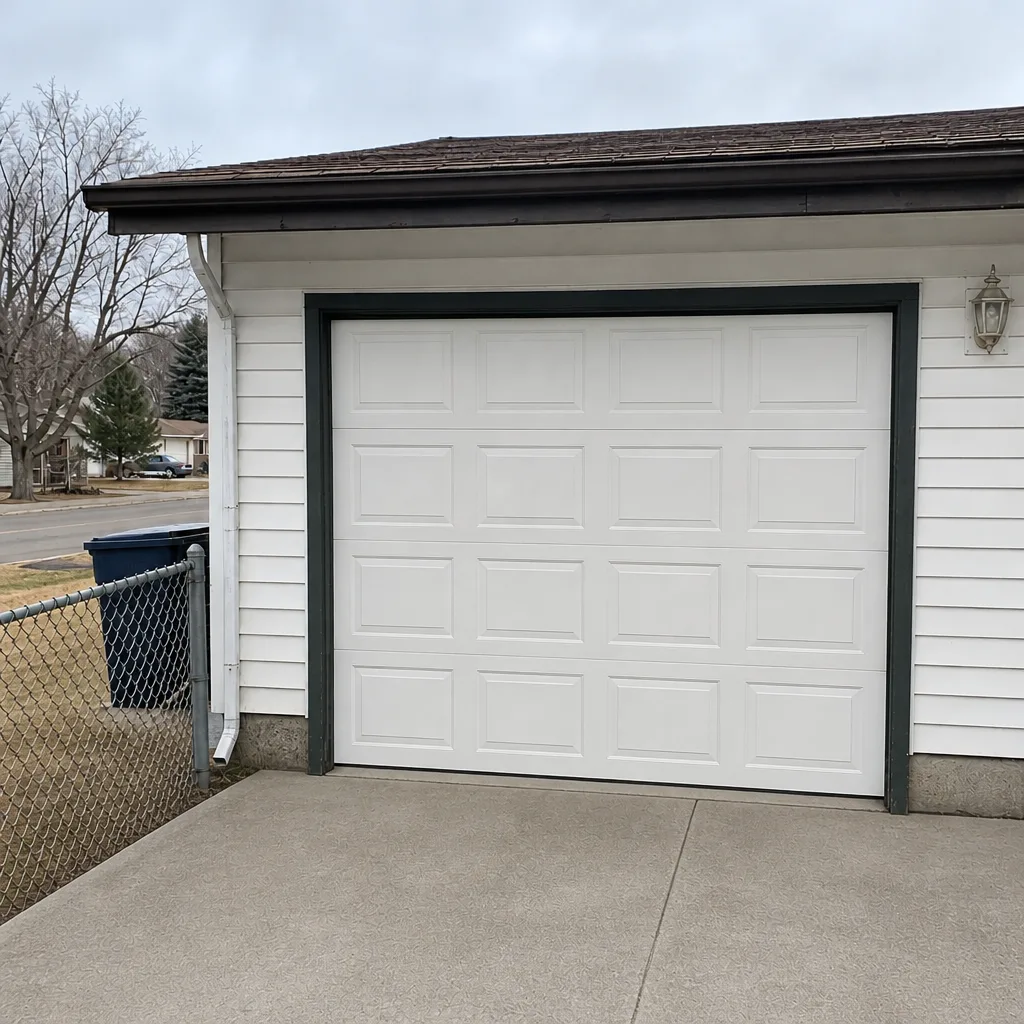
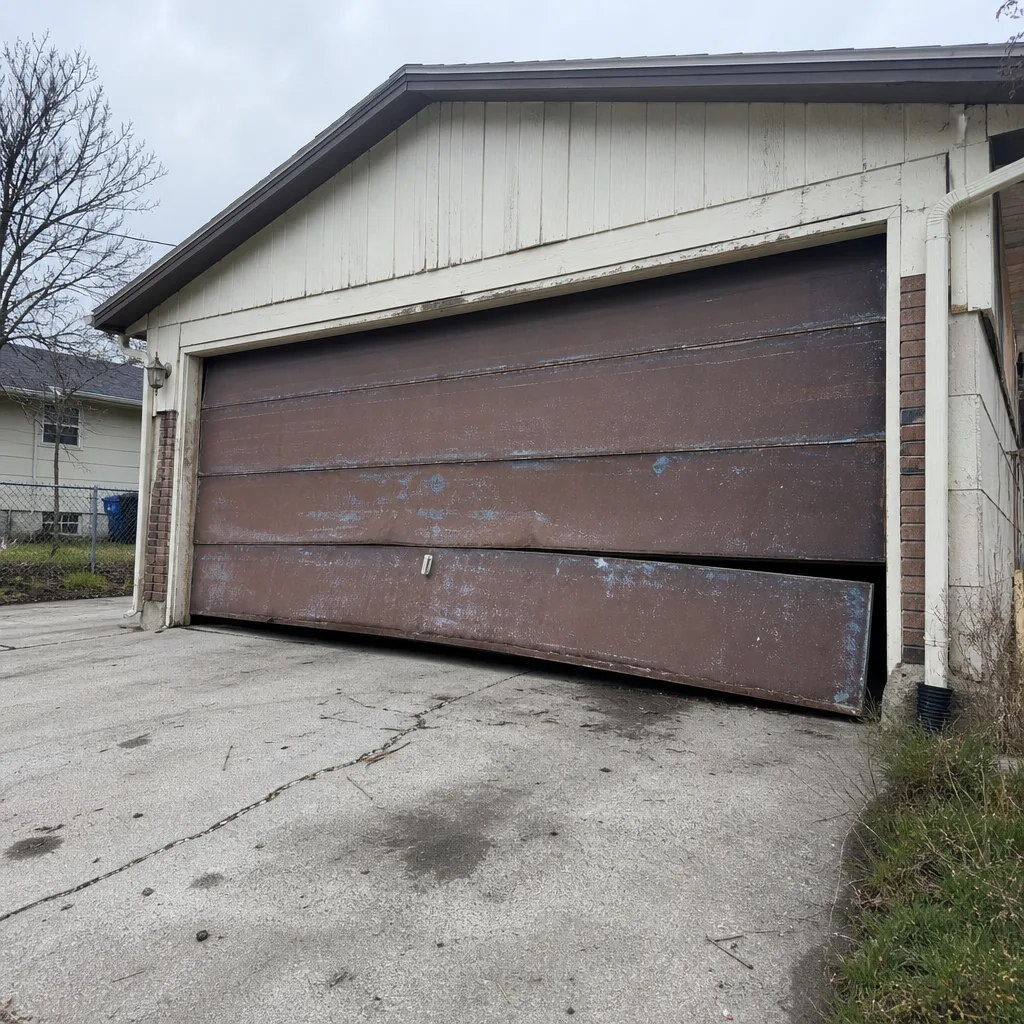
See the difference
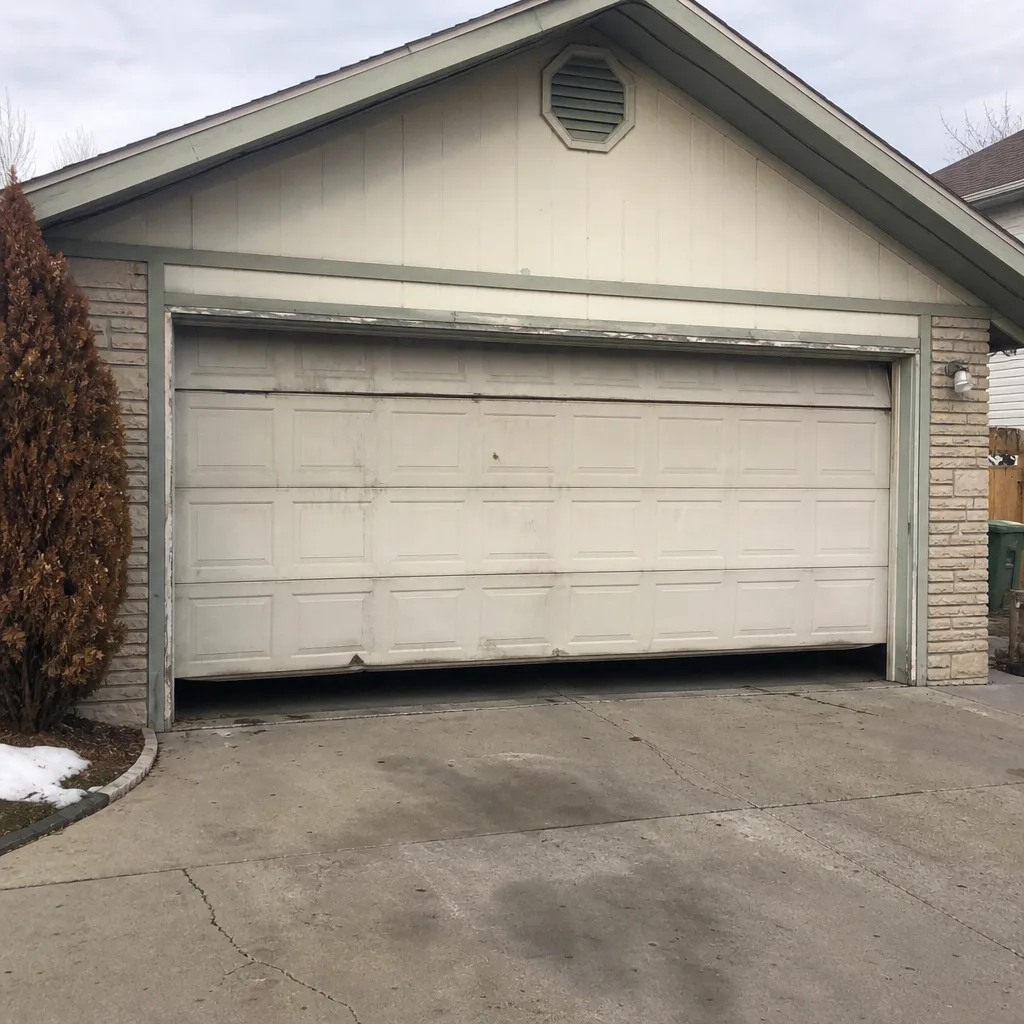 Before
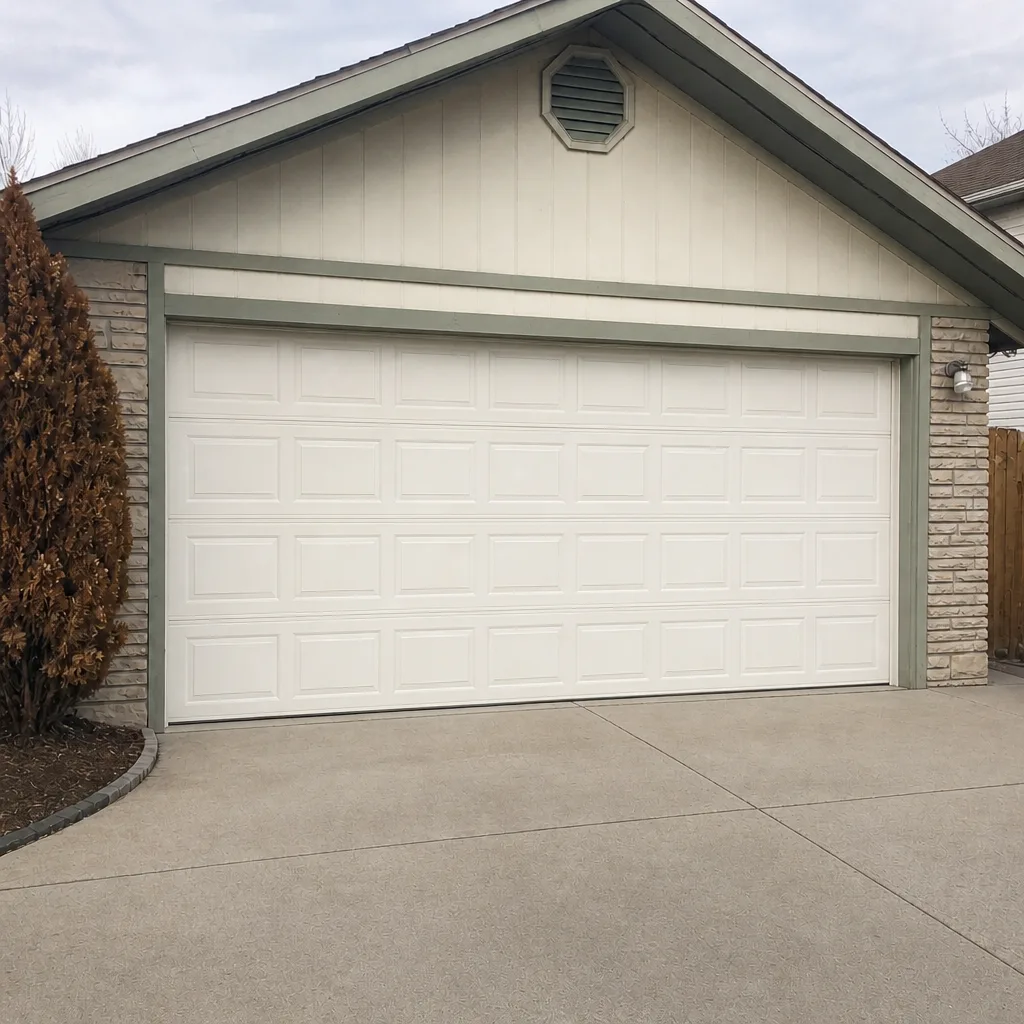 After
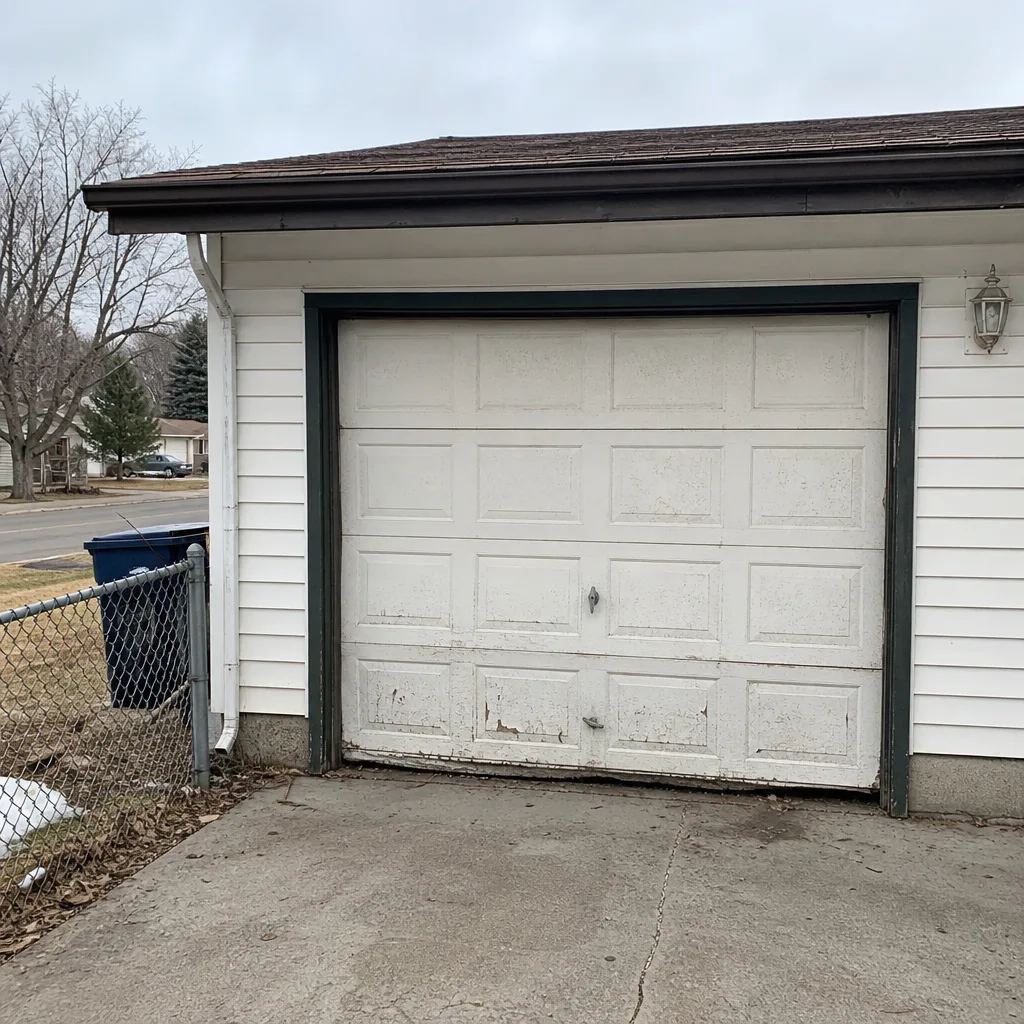 Before
 After
 Before
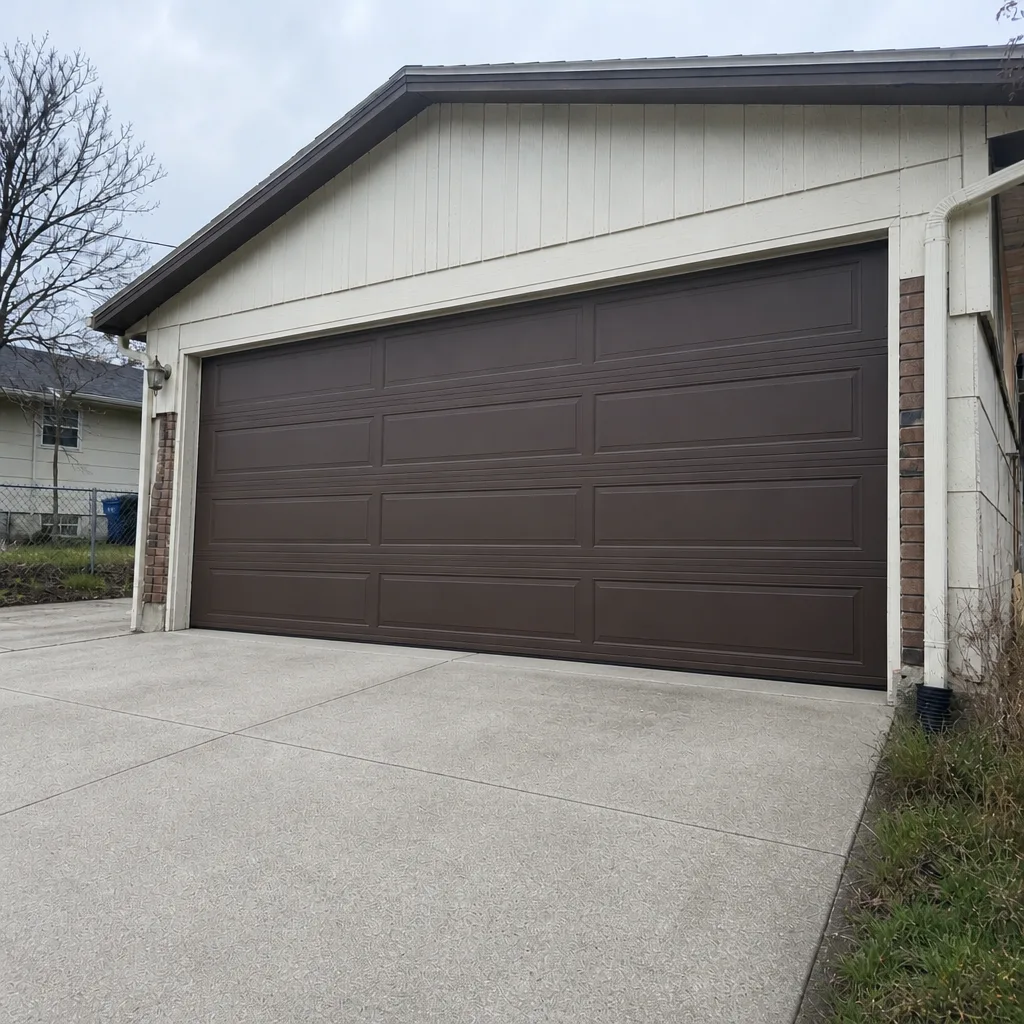 After
When to Call a Professional
Call a professional the moment you see a frayed cable, a gap in the torsion spring, a buckling panel or a door you can’t control by hand. Those are safety signs, not maintenance items. Call when your door jerks in only one direction, when the opener hums but the door doesn’t move, when the door reverses without obstruction, or when a noise that used to fade on a cold morning has become constant. Call when you’re not sure whether the noise is a door problem or an opener problem, because that’s the exact distinction that decides the fix. We’re here for Salt Lake City homeowners who’d rather diagnose the symptom than guess at it, and our technicians have up to experience working on the brands you already own. Cypress Garage Door Service offers free estimates in Salt Lake City, call (866) 389-4585. We answer 24/7. Fast dispatch from 7am to 7pm, Sunday through Friday.
Frequently Asked Questions
A grinding or scraping noise on the way up or down is the most common warning sign, and it usually points to worn rollers, dry bearings or a spring that’s lost tension. In our experience, it’s also the most frequently ignored, because homeowners mistake it for normal cold-weather noise. If the sound doesn’t fade after a few cycles, have it checked. Call (866) 389-4585 for a free estimate.
Yes, mild creaking on the first cold-morning startups is usually normal in Salt Lake City. Metal contracts overnight and shifts as the door runs, and the dry valley air pulls lubricant out of the moving parts faster than in a humid climate. The creak that matters is the one that’s still there after the door has cycled several times. Call (866) 389-4585 for a free estimate.
Pull the emergency release and lift the door by hand. If it’s heavy or jerky, the problem is on the door side; if it’s smooth but the opener won’t move it, the opener is the likely culprit. That single test tells you which half of the system to focus on, without tools. Call (866) 389-4585 for a free estimate.
A frayed cable, a visible gap in the torsion spring, a buckling panel, and a door that drops fast on closing all mean stop using the door today. These are safety risks, and spring or cable work is genuinely dangerous to attempt yourself. For anything else, a scheduled repair window is usually fine. Call (866) 389-4585 for a free estimate.
You can usually schedule a noisy door rather than stopping everything, but don’t wait long. A door typically declines over about 90 days, and a small noise at 90 days becomes a full component failure around 30. The cost of waiting is almost always more than the cost of the earlier repair. Call (866) 389-4585 for a free estimate.
Yes, if you tell us what’s printed on the door and the opener. We work across eight major brands including LiftMaster, Chamberlain, Craftsman and Raynor, so knowing the brand lets us confirm the likely wear pattern and order the exact part rather than a workaround. It’s the same on every Salt Lake City visit. Call (866) 389-4585 for a free estimate.
The Bottom Line
Garage door warning signs aren’t one problem, they’re a map of the components under stress. A jerking door going up points at the spring, a jerking door going down points at the track, a grinding noise points at rollers or bearings, and a door that reverses without help points at the opener sensors. In Salt Lake City, mild cold-morning creaking is usually normal, while a noise that doesn’t fade, a heavy door or a sagging panel is not. The homeowners who get the right fix at the right price are the ones who describe the symptom accurately and call before the 30-day failure window. If you’re unsure what your door is telling you, that’s exactly what Salt Lake City homeowners call us for. Call (866) 389-4585 for a free estimate. We answer 24/7. Fast dispatch from 7am to 7pm, Sunday through Friday.
Written by the team at Cypress Garage Door Service.